
If you wear a uniform to work in Singapore whether you are a police officer, a firefighter with SCDF, or a soldier in the SAF you know that your body is not just for show. It is your primary tool for getting the job done. Your physical fitness directly impacts your ability to protect others, respond to emergencies, and return home safely to your family at the end of your shift. This is why so many uniformed personnel in Singapore are turning to personal gym trainer singapore professionals who understand the specific demands of their jobs and can help them prepare for the IPPT and beyond.
The Individual Physical Proficiency Test, commonly known as IPPT, is a requirement for all national servicemen and regular uniformed personnel. But passing the IPPT is just the baseline. The real goal for those who serve is to maintain a level of fitness that allows them to perform their duties effectively, whether that means chasing a suspect, carrying someone out of a burning building, or marching long distances with heavy equipment. Generic fitness programmes simply do not address these unique demands.
Understanding the Specific Demands of Uniformed Service
Before a personal trainer can design an effective programme for uniformed personnel, they must understand exactly what these jobs require. It is not just about being generally fit. It is about being fit for a specific purpose.
For police officers, fitness demands include sprinting after suspects, often in short bursts of maximum effort. They need upper body strength for controlling resisting individuals and for performing tasks like climbing fences or pulling themselves over obstacles. They also need endurance for long periods on their feet during events or patrols. And crucially, they need to maintain all of this fitness while wearing heavy equipment including vests, belts with gear, and sometimes body armour.
For SCDF firefighters, the demands are even more extreme. They must be able to don heavy protective gear, enter burning buildings, carry victims to safety, and operate heavy equipment all while under extreme stress and in dangerous environments. Cardiovascular endurance is critical, but so is raw strength. Firefighters need to be powerful enough to breach doors and strong enough to carry adults who may be much larger than themselves.
For SAF personnel, the requirements vary by vocation but often include marching with heavy loads, operating in challenging terrain, and maintaining physical readiness for deployment at any time. The fitness must be robust enough to handle long periods of field training without breaking down.
Why Standard Gym Programmes Fall Short
A typical gym goer might focus on building muscle for appearance or improving cardiovascular health for general wellness. These are worthy goals, but they do not translate directly to the needs of uniformed personnel. A bodybuilder with impressive muscles may lack the functional endurance needed for sustained physical effort. A marathon runner may have excellent cardiovascular fitness but insufficient strength for the demands of the job.
Uniformed personnel need what exercise scientists call tactical fitness. This means fitness that is specific to the tasks they will perform. It means training movements, not just muscles. It means preparing the body for the unpredictable nature of emergency response, where you never know exactly what physical challenge you will face next.
A personal trainer with experience working with uniformed clients understands this distinction. They design programmes that include:
-
High intensity interval training that mimics the stop start nature of emergency response
-
Loaded carries that simulate moving equipment or carrying injured persons
-
Grip strength work for tasks like holding onto suspects or operating tools
-
Core stability that protects the lower back during heavy lifting in awkward positions
-
Conditioning that maintains effectiveness even when fatigued
IPPT Preparation That Goes Beyond Passing
The IPPT consists of push ups, sit ups, and a 2.4 kilometre run. On the surface, these seem simple enough. But preparing for the IPPT effectively requires more than just doing push ups and running. It requires understanding the mechanics of each test and training the body to perform optimally under test conditions.
For push ups, many people fail not because they lack strength but because their form breaks down as they fatigue. A personal trainer teaches proper technique, including how to brace the core, how to position the hands, and how to breathe efficiently. They also build the specific muscles used in push ups, including the chest, shoulders, triceps, and core, so that you have the endurance to maintain good form throughout the test.
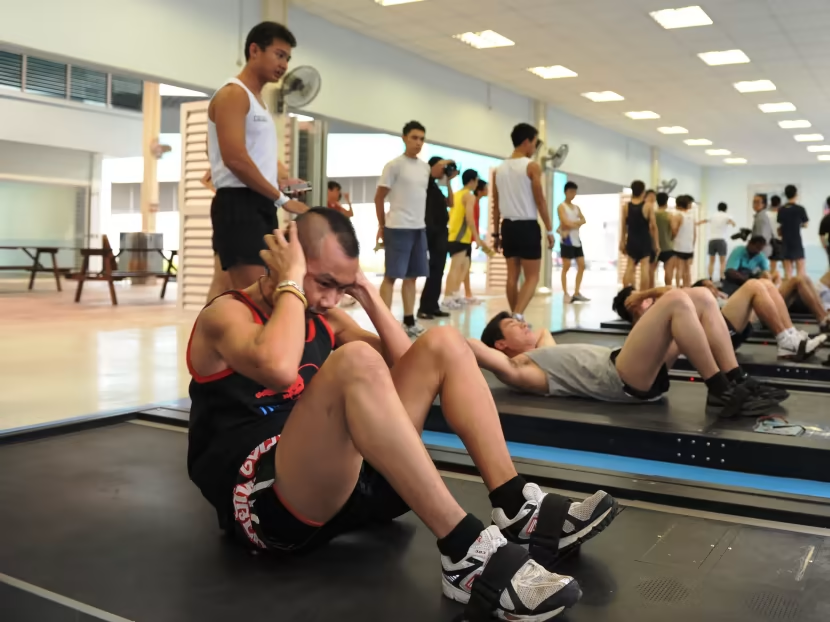
For sit ups, the common mistake is using momentum rather than abdominal strength. This not only reduces effectiveness but can also strain the lower back. A trainer teaches proper sit up technique and builds the deep core strength needed to perform them safely and efficiently. They also address hip flexor tightness, which is common in people who sit at desks, and which can interfere with proper sit up performance.
For the 2.4 kilometre run, the key is pacing. Many people start too fast, burn out, and then struggle to finish. A trainer helps you develop a pacing strategy based on your current fitness level and teaches you how to maintain that pace even when you are tired. They also build your aerobic base through appropriate conditioning work so that the 2.4 kilometre distance feels manageable rather than daunting.
Injury Prevention for Career Longevity
One of the biggest concerns for uniformed personnel is the risk of career ending injuries. A back injury from improper lifting, a knee injury from running on hard surfaces, a shoulder injury from repetitive strain these can end a career and have lifelong consequences. Personal training is as much about preventing these injuries as it is about improving performance.
A skilled trainer teaches uniformed clients how to move safely in all circumstances. They correct movement patterns that put joints at risk. They build strength in the stabilising muscles that protect the spine and knees. They ensure that the body has the mobility needed to perform job tasks without compensating in ways that lead to injury.
This injury prevention focus extends to recovery as well. Uniformed personnel often push through pain and ignore minor injuries, hoping they will go away on their own. A trainer teaches you to listen to your body and address issues before they become serious. They incorporate recovery strategies into your programme, including mobility work, proper warm ups and cool downs, and guidance on when to push and when to rest.
Balancing Training with Shift Work
Uniformed personnel rarely work a standard nine to five schedule. Shift work, night shifts, and irregular hours are the norm. This creates unique challenges for maintaining fitness. When do you train when you are working nights? How do you recover when your sleep schedule is constantly changing?
A personal trainer with experience working with shift workers understands these challenges. They help you design a flexible training schedule that works around your shifts rather than against them. They teach you how to adjust your nutrition and hydration for night shifts. They help you understand when it is better to rest than to force a workout on no sleep.
This practical, realistic approach is what makes personal training so valuable for uniformed personnel. It is not about an ideal training schedule that works perfectly on paper. It is about finding a way to maintain fitness in the real world, with all its unpredictability and demands.
At True Fitness Singapore, trainers have worked with countless uniformed personnel and understand the unique pressures these clients face. They know that your fitness is not just personal it is professional. It is about being ready when your country or your community needs you.
Frequently Asked Questions
Q: How far in advance should I start training for my IPPT?
A: Ideally, fitness should be maintained year round so that IPPT preparation is just a refinement rather than a scramble. If you are starting from a low base, give yourself at least eight to twelve weeks of consistent training before your test.
Q: Can training help if I have a pre existing injury from my service?
A: Yes, but you must work with a trainer who understands your specific limitations and has experience with injury rehabilitation. They can design a programme that works around your injury while building strength in supporting areas.
Q: How do I train effectively when I am on night shift rotation?
A: Focus on consistency rather than intensity during shift work. Shorter, well structured sessions may be more sustainable than long workouts. Prioritise sleep and nutrition on your recovery days, and communicate openly with your trainer about your schedule so they can adjust your programme accordingly.
Q: Will personal training help me pass my IPPT if I have failed before?
A: Absolutely. Many people fail the IPPT not because they are unfit but because they do not understand the specific demands of the test or they have technique issues that limit their performance. A trainer identifies these gaps and addresses them directly.