
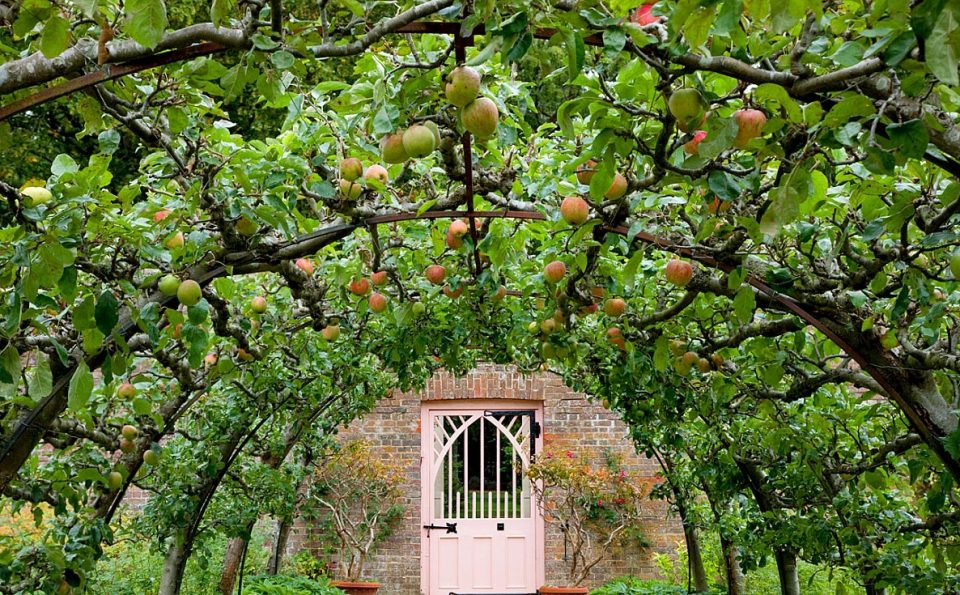
Espalier shaping offers a practical method for cultivating fruit trees in confined spaces, particularly in the compact gardens common across the United Kingdom. This technique, which involves training branches along a flat surface, maximises sunlight exposure and simplifies harvesting while producing high yields from varieties such as apple trees. Originating from European orchards, espalier has adapted well to modern British conditions, where soil types range from clay-heavy plots in the Midlands to lighter loams in the south. For gardeners seeking efficiency, the process demands precision but yields rewarding results. This article outlines five clear steps to achieve mastery, drawing on established horticultural practices to guide selection, training, and care.
Before proceeding, consider advice from the fruit trees specialists at Fruit-Trees nursery: “Choosing rootstocks like M26 or MM106 ensures vigorous growth suited to espalier forms, allowing for controlled development in limited areas.” For suitable options, explore fan espalier apple trees. Such selections promote healthy establishment, reducing the risk of structural weaknesses over time.
The appeal of espalier lies in its versatility. In urban settings like those in London or Manchester, where plots measure mere metres, this method transforms walls or fences into productive features. Apple trees, with their biennial bearing tendencies, respond particularly well, offering fruits from late summer into autumn. Data from the Royal Horticultural Society indicates that trained trees can yield up to 50 kilograms per mature specimen, far exceeding untrained counterparts in equivalent space. Gardeners must account for local climate variations; for instance, frost pockets in northern regions necessitate hardy varieties like ‘Discovery’ or ‘James Grieve’. Preparation begins with assessing sunlight—ideally six to eight hours daily—and wind protection, as exposed sites can desiccate young shoots.
Soil preparation forms the foundation. British gardens often feature alkaline chalk or acidic peat, so testing pH (aiming for 6.0 to 7.0) prevents nutrient lockout. Incorporating organic matter, such as well-rotted compost, enhances drainage without over-fertilising, which might encourage excessive vegetative growth at the expense of fruiting spurs. Water retention proves crucial during establishment, with drip irrigation systems proving effective in drier southeastern counties. By following these preliminaries, practitioners set the stage for the structured steps ahead, ensuring long-term viability.
Step 1: Selecting and Preparing the Framework
The first step in mastering espalier shaping centres on erecting a robust framework, which serves as the scaffold for branch development. This structure must withstand the weight of mature fruit-laden limbs, typically spanning two to four metres in height and width, depending on the allotted space. Wire systems, spaced 30 to 40 centimetres apart vertically, offer durability and flexibility; galvanised steel wires stretched between sturdy posts embedded 60 centimetres into the ground provide stability against prevailing westerly winds common in the UK.
Selection of materials requires attention to longevity. Timber frames suit rustic aesthetics in cottage gardens, but metal alternatives resist rot in damp climates like those in Wales or Scotland. Posts should measure at least 75 millimetres in diameter, treated with preservative to counter fungal threats. Horizontal wires, tensioned using turnbuckles, allow for adjustments as the tree expands. For apple trees, a fan or horizontal cordon layout proves most practical—the former radiates branches outward like an open hand, optimising light interception.
Preparation extends to site marking. Measure the wall or fence alignment precisely, ensuring the framework sits 15 centimetres from the surface to promote air circulation and deter pests such as codling moth. In shaded northern exposures, reflective mulches beneath can supplement light. Cost considerations remain modest; a basic setup for a two-metre span costs under £50, accessible for most budgets. Once installed, inspect for tautness—loose wires invite sagging branches that complicate training.
This foundational work influences subsequent growth patterns. Poorly aligned frames lead to uneven development, where lower branches overshadow upper ones, reducing overall productivity. Historical records from 17th-century English estates, such as those documented in Evelyn’s Sylva, highlight the importance of such precision, where espalier walls defined productive kitchen gardens. Modern adaptations incorporate frost netting during bloom to protect pollinators, aligning with biodiversity guidelines from Natural England. By investing time here, gardeners mitigate future corrections, fostering a framework that supports vigorous, symmetrical expansion.
When embarking on this project, many find it beneficial to buy fruit trees from reputable sources early, allowing time for acclimatisation before tying in initial leaders. Varieties propagated on dwarfing rootstocks integrate seamlessly, minimising vigour that could overwhelm slender wires. Testing the setup with temporary ties ensures compatibility, paving the way for seamless progression to planting.
Step 2: Choosing and Planting the Tree
Selecting an appropriate tree marks the second critical step, where compatibility with the espalier form determines success. For British conditions, apple cultivars like ‘Cox’s Orange Pippin’ or ‘Egremont Russet’ excel due to their compact habit and spur-fruiting nature, bearing fruits on short lateral shoots rather than long branches. These varieties tolerate the pruning intensity required, maintaining productivity without reverting to wild growth. Rootstock choice—such as M9 for very restricted forms or M27 for pots—dictates ultimate size; consult grafting records from East Malling Research for specifics.
Planting occurs ideally in late autumn or early spring, aligning with dormant periods to reduce transplant shock. Dig a hole 45 centimetres wide and deep, twice the root ball’s dimension, incorporating mycorrhizal fungi to enhance establishment. Position the tree’s base 30 centimetres above ground level to accommodate soil settling, and stake loosely to prevent root disturbance. For wall-trained specimens, orient the main stem vertically initially, selecting two strong buds as future leaders for the primary arms.
Soil amendment at this stage focuses on balance. In heavy clay prevalent in the Home Counties, add grit for aeration; sandy soils in East Anglia benefit from humus-rich topsoil. Water thoroughly post-planting—equivalent to 20 litres per session weekly—until roots anchor. Mulching with 5 centimetres of bark suppresses weeds and conserves moisture, critical during dry spells forecasted by the Met Office.
Initial tying secures the central leader to the lowest wire, using soft twine or rubberised ties to avoid girdling. Space emerging shoots 20 centimetres apart, promoting even distribution. Observations from long-term trials at the National Fruit Collection in Brogdale reveal that early intervention boosts fruit set by 25 per cent in the first three years. Gardeners should monitor for aphid incursions, treating with horticultural oil if necessary, to safeguard young foliage.
This phase establishes the tree’s orientation, influencing branching angles that optimise photosynthesis. Inconsistent planting depths lead to basal suckers, diverting energy from the desired form. By prioritising disease-resistant strains, such as those certified under the Plant Health Order, practitioners ensure compliance with UK import regulations, especially for mail-order acquisitions. Patience yields here; visible shaping emerges within the first season, setting a trajectory for refined structure.
Step 3: Initial Training and Branch Development
With the tree planted, the third step involves initial training, guiding shoots into the espalier plane over the first two years. This period builds the skeletal framework, where flexibility in young wood allows bending without breakage. Select the strongest shoots for horizontal arms, tying them at 45-degree angles to the wires to encourage lateral budding. For a cordon espalier, extend leaders obliquely upward; in fan shapes, curve arms outward symmetrically.
Timing aligns with late winter pruning, removing inward-facing or crossing growth to maintain openness. Use sharp secateurs for clean cuts, applying a thin layer of pruning sealant to major wounds in humid regions prone to silver leaf fungus. Fertilisation commences sparingly— a balanced NPK 10-10-10 applied in spring— to avoid lush growth susceptible to frost damage during April chills.
Monitoring progress requires weekly inspections during the growing season. As shoots elongate, train them gently, securing every 15 centimetres to prevent wind rub. In exposed coastal areas like Cornwall, windbreaks of hessian cloth protect tender tips. Data from the Fruit Tree Research Station underscores that consistent training reduces biennial bearing by promoting even bud distribution.
Complications arise from over-vigorous shoots, which can snap under tension. Counter this by pinching out tips in midsummer, redirecting energy to sub-laterals. Companion planting with low herbs, such as chives, deters aphids naturally, aligning with organic principles endorsed by the Soil Association. By season’s end, the form should outline the intended pattern, with four to six arms established.
This foundational training embeds habits for future ease. Neglect here results in tangled growth, necessitating severe corrective pruning that stresses the tree. British gardeners, facing variable weather, benefit from sheltered microclimates; south-facing walls in Yorkshire retain heat, accelerating development. Through methodical application, the espalier begins to resemble a living artwork, promising aesthetic and functional returns.
Step 4: Pruning for Structure and Productivity
Pruning constitutes the fourth step, refining the espalier’s structure annually to balance vegetative and reproductive growth. Conducted in late July after harvest, summer pruning targets fruited spurs, shortening them to three leaves to stimulate renewal. This timing avoids sap bleeding common in winter cuts, particularly in mild southern winters. For apples, remove watersprouts—vigorous upright shoots—entirely, as they shade fruiting areas and harbour pests.
Winter pruning follows in January, focusing on framework maintenance. Thin overcrowded branches, maintaining 10 to 15 centimetres between laterals, to ensure light penetration. Cuts should angle just above outward-facing buds, promoting horizontal extension. In varieties like ‘Braeburn’, which tend toward apical dominance, tip-prune leaders to encourage side branching.
Tool hygiene prevents disease spread; sterilise blades with alcohol between sessions. Fertiliser adjustments—higher potash in autumn—bolster fruit quality, countering deficiencies evident in yellowed leaves. Yield assessments guide intensity; if production dips below 20 fruits per metre, lighten pruning to rebuild spurs.
Challenges include over-pruning, which delays cropping, or under-pruning, leading to dense canopies vulnerable to scab. Integrated pest management, incorporating pheromone traps for moths, complements this regime. Studies from the University of Reading demonstrate that disciplined pruning elevates sugar content by 15 per cent through improved insolation.
This step demands observation, adapting to the tree’s response. In northern latitudes with shorter days, earlier interventions maximise cumulative light. By honing these skills, gardeners cultivate not just form but resilience, yielding consistent harvests amid climatic shifts.
Step 5: Maintenance, Harvesting, and Long-Term Care
The fifth step encompasses ongoing maintenance, harvesting, and adaptations for sustained productivity, extending the espalier’s lifespan to 20 years or more. Regular feeding with compost in spring replenishes nutrients, while autumn mulching insulates roots against freezes. Irrigation schedules adjust seasonally—deeper, less frequent in summer—to foster drought tolerance.
Harvesting commences when fruits colour and soften slightly; for early apples like ‘Discovery’, this falls in August, extending to stored keepers like ‘Bramley’ into winter. Gentle twisting avoids spur damage, filling baskets to prevent bruising. Post-harvest, clear fallen debris to curb overwintering pathogens.
Long-term care involves renewal pruning every three years, replacing aged spurs with young wood. Renovation for neglected forms starts with gradual thinning, restoring shape over two seasons. Climate resilience builds through mulching and wind protection, vital as UK weather patterns evolve.
Pest vigilance persists; netting excludes birds during ripening, and organic sprays manage mildews. Economic analyses from DEFRA highlight espalier’s efficiency, producing £5 worth of fruit per square metre annually. By embedding these practices, the garden yields continuously, blending utility with elegance.
Conclusion: Achieving Proficiency in Espalier
Mastering espalier shaping through these five steps transforms limited spaces into bountiful assets, tailored to British gardening realities. From framework erection to meticulous care, each phase builds upon the last, yielding structured trees that thrive under attentive management. Apple espaliers, in particular, offer a rewarding entry, their forms enhancing garden aesthetics while providing fresh produce.
Gardeners gain proficiency with practice, adapting techniques to site specifics. Resources from the RHS and local horticultural societies supplement hands-on experience. Ultimately, this method embodies efficient cultivation, rewarding those who invest in its disciplined pursuit with seasons of reliable abundance.