
Every major technological leap in human history has been anchored to materials. The transition from stone to bronze, and later from iron to steel, redefined what societies could construct, transport, and defend. In the modern era, traditional materials such as structural steel, basic aluminum alloys, and conventional commodity plastics have reached their physical performance limits. Industries operating at the cutting edge can no longer achieve dramatic improvements in efficiency, thermal tolerance, or sustainability using standard off-the-shelf substances.
To overcome these physical bottlenecks, industrial manufacturing has turned toward advanced materials. These engineered substances exhibit superior characteristics tailored to specific mechanical, electrical, thermal, or chemical demands. By manipulating matter at the molecular and atomic levels, material scientists are developing solutions that are lighter than aluminum, stronger than structural steel, resistant to extreme corrosive environments, and capable of adapting dynamically to operational shifts. The widespread integration of advanced materials is not merely an evolutionary upgrade; it is an industrial revolution driving modern engineering, energy generation, mobility, and computational hardware.
The Catalysts Reshaping Material Science
The rapid emergence of advanced materials is fueled by unprecedented convergence across computational design, analytical instrumentation, and advanced fabrication tools.
Historically, developing an alloy or synthetic composite required years of empirical trial and error. Metallurgists mixed elements in varying proportions, cast physical ingots, subjected them to destructive mechanical stress testing, and analyzed the failures. This empirical framework was costly, slow, and constrained by human intuition.
Today, high-performance computing, quantum chemistry simulations, and machine learning models predict atomic interactions and crystallographic phases before a single sample is synthesized. Researchers can specify desired performance criteria, such as a targeted tensile strength, a precise thermal expansion coefficient, or specific magnetic behaviors, and algorithmic models generate corresponding molecular configurations.
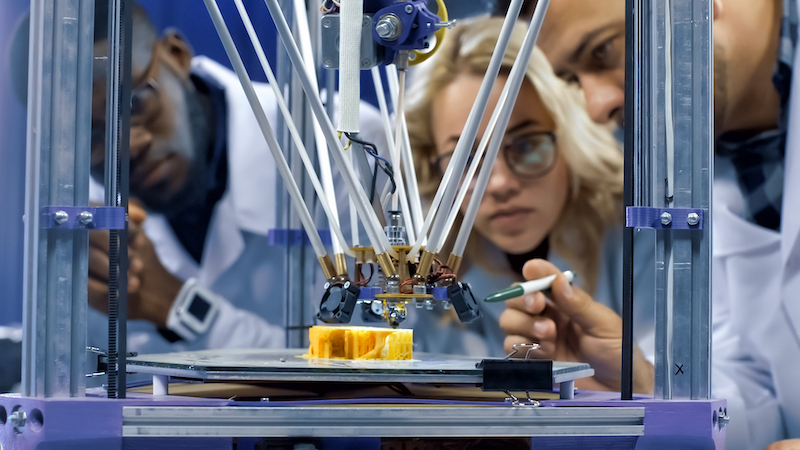
Simultaneously, analytical instruments like aberration-corrected transmission electron microscopes allow engineers to observe atomic dislocations and boundary defects in real time. Additive manufacturing processes, such as direct metal laser sintering, turn these computational designs into complex, multi-material components that traditional casting and subtractive machining could never produce.
High-Performance Composites in Aerospace and Automotive Engineering
Weight reduction remains the primary engineering objective across transportation sectors. In aerospace and automotive manufacturing, every ounce eliminated translates directly into lower fuel consumption, reduced operational emissions, extended travel ranges, and increased payload capacities. Advanced composites have emerged as the premier structural substitute for heavy metals.
Carbon-Fiber-Reinforced Polymers
Carbon-fiber-reinforced polymers combine high-tensile carbon fibers embedded within a thermosetting or thermoplastic polymer matrix. This configuration provides exceptional strength-to-weight and stiffness-to-weight ratios that surpass standard structural metals.
-
Aviation airframe design: Modern commercial aircraft utilize carbon-fiber composites for over fifty percent of their primary structural weight, encompassing wings, empennages, and fuselage sections. These materials resist atmospheric fatigue and eliminate internal oxidation hazards, reducing recurring maintenance overhauls.
-
Automotive chassis and electric vehicle structures: In electric vehicle manufacturing, heavy battery packs place strict limits on vehicle range. Integrating lightweight carbon-fiber composite monocoques and structural body panels offsets battery weight, boosting vehicle range and improving rollover crash safety.
-
Corrosion immunity: Unlike structural steels, composite assemblies do not degrade when exposed to salt water, high humidity, or harsh industrial chemicals, providing a substantial operational advantage in marine and coastal logistics.
Ceramic Matrix Composites
Traditional technical ceramics offer exceptional thermal and wear resistance, yet their inherent brittleness has historically limited their structural utility under mechanical shock. Ceramic matrix composites resolve this limitation by embedding ceramic fibers within a specialized ceramic matrix, combining thermal stability with structural fracture toughness.
These materials operate reliably in environments exceeding twelve hundred degrees Celsius, temperatures that would soften or melt high-performance nickel superalloys. In commercial jet engines and stationary gas power turbines, replacing metallic turbine blades with ceramic matrix composites eliminates the need for complex cooling channels. This allows combustion chambers to run significantly hotter, increasing thermodynamic fuel efficiency while dramatically lowering nitrogen oxide emissions.
Nanomaterials and the Power of Two-Dimensional Architecture
When materials are engineered at the nanoscale, typically defined as dimensions below one hundred nanometers, quantum mechanics begin to dominate their physical characteristics. Properties like electrical conductivity, optical transparency, and surface chemical reactivity change fundamentally compared to bulk materials of identical chemical makeup.
Graphene and Carbon Nanotubes
Graphene, a single layer of carbon atoms arranged in a two-dimensional hexagonal lattice, remains one of the most remarkable advanced materials discovered. It exhibits tensile strength over one hundred times greater than steel, thermal conductivity superior to diamond, and electron mobility that surpasses silicon.
-
Electrochemical energy storage: Incorporating graphene and multi-walled carbon nanotubes into lithium-ion and solid-state battery electrodes accelerates electron transfer kinetics. This allows faster charging cycles, reduces internal battery degradation, and increases volumetric energy densities.
-
Structural reinforcement in cement and polymers: Adding minute fractions of graphene nanoplatelets into industrial concrete mixes enhances compressive strength and accelerates curing timelines while reducing total clinker volume, mitigating the carbon footprint of structural infrastructure projects.
-
Advanced thermal management: As microprocessors shrink and compute power escalates, dissipating concentrated heat flux becomes critical. Graphene-based thermal interface materials channel heat away from high-density computer silicon far more efficiently than standard copper heat spreaders.
Smart and Adaptive Materials
Traditional engineering relies on passive materials designed to withstand anticipated forces within static operational thresholds. By contrast, smart materials respond actively to external environmental inputs, such as temperature variations, applied electrical fields, mechanical pressure, or chemical alterations.
-
Shape memory alloys: Alloys composed of nickel and titanium, commonly known as nitinol, undergo reversible solid-state phase transformations between distinct crystallographic structures. When deformed at lower temperatures, they return to their original pre-set geometry upon heating. These materials serve as solid-state actuators in aerospace linkages, downhole oil drilling valves, and medical cardiovascular stents, eliminating the need for bulky motors, pneumatic lines, and complex mechanical hinges.
-
Piezoelectric ceramics and polymers: These substances generate an electrical charge when subjected to mechanical deformation, and conversely, deform mechanically when exposed to an applied electric field. They function as high-precision positioning actuators in semiconductor fabrication steppers, acoustic transducers in marine sonar, and vibrational energy-harvesting modules that power remote wireless sensors on industrial machinery.
-
Self-healing polymers and coatings: Advanced polymer matrices containing micro-encapsulated healing agents or reversible chemical bonds repair microscopic surface cracks automatically. When micro-fractures develop due to operational stress, the embedded capsules rupture or cross-link across the boundary, restoring structural integrity and halting fatigue propagation before catastrophic failure occurs.
Accelerating the Clean Energy Transition
Achieving global decarbonization and transitioning to decentralized energy networks relies fundamentally on advanced materials. Renewable energy infrastructure operates in unforgiving exterior environments, requiring specialized compounds to withstand constant environmental wear.
In wind power generation, modern offshore turbine blades exceed one hundred meters in length. Manufacturing structures of this scale requires advanced glass-carbon hybrid textiles and bio-based epoxy resins that withstand turbulent aerodynamic buffeting, coastal salt-fog corrosion, and cyclical gravitational stresses without sagging over decades of continuous operation.
In solar energy capture, advanced materials are driving the next generation of photovoltaic performance. Perovskite crystal structures, paired with conventional silicon in tandem multi-junction solar cells, absorb different spectrums of solar radiation. This multi-layered design shatters the theoretical efficiency ceilings of traditional single-junction silicon wafers, dramatically increasing energy output per square foot of installed surface area.
Furthermore, the emerging hydrogen economy depends entirely on specialized membranes and catalyst compounds. Proton-exchange membrane electrolyzers demand advanced fluoropolymer membranes and low-loading platinum-group catalysts to split water molecules efficiently. Simultaneously, storing hydrogen gas safely at high operational pressures requires specialized carbon-composite overwrapped pressure vessels capable of withstanding hundreds of atmospheres of pneumatic stress without microscopic gas leakage.
Navigating Supply Chains, Scalability, and Life-Cycle Realities
Despite the clear benefits of advanced materials, widespread industrial integration faces serious operational and commercial challenges.
The primary obstacle is economic scalability. Many synthesized materials that perform brilliantly in controlled university cleanrooms prove difficult and expensive to manufacture at high volumes. Producing defect-free single-layer graphene, continuous-filament ceramic fibers, or ultra-pure metal powders requires capital-intensive reactor setups, precise atmospheric controls, and specialized operator training. High initial unit economics frequently confine these materials to mission-critical aerospace, military, and luxury performance niches until economies of scale can be established.
Supply chain vulnerabilities present a parallel concern. Many advanced alloys and electronic compounds rely on critical minerals and rare earth elements with highly concentrated geopolitical supply chains. Extracting and refining these elements often involves severe environmental costs, carbon-heavy refining protocols, and vulnerability to trade embargoes.
Finally, end-of-life reclamation poses a modern environmental dilemma. While advanced composites offer exceptional longevity and operational efficiency during their functional lifecycles, their robust chemical durability makes them difficult to recycle. Thermoset resins cannot be melted down and re-molded like standard thermoplastics. Developing circular chemistry, such as bio-derived resins that dissolve cleanly in benign chemical solvents, is essential to ensure that the materials solving today’s industrial efficiency challenges do not become tomorrow’s permanent landfills.
Advanced materials are fundamentally transforming what modern industry can design, construct, and sustain. By bridging computational design with advanced manufacturing, engineers are moving past the limitations of traditional elements to build lighter, stronger, and more responsive industrial ecosystems. As production costs decline and scalable recycling methods mature, advanced materials will continue to serve as the silent, indispensable driver of global industrial progress.
Frequently Asked Questions
What constitutes an advanced material compared to a conventional material?
A conventional material is a widely available, standardized substance like carbon steel, standard aluminum, commodity glass, or basic polyethylene used for general structural and commercial purposes. An advanced material is a substance engineered with enhanced, highly targeted mechanical, chemical, electrical, or thermal properties. Advanced materials are typically developed through molecular synthesis, nanotechnology, specialized alloying, or complex composite fabrication to excel under extreme operational demands where conventional materials fail.
How does additive manufacturing accelerate the adoption of advanced materials?
Additive manufacturing, or industrial 3D printing, accelerates adoption by allowing manufacturers to create complex geometric shapes, such as internal lattice structures and conformal cooling channels, that cannot be fabricated using traditional molds or subtractive milling tools. Furthermore, advanced multi-powder additive systems allow engineers to print gradient materials, transitioning seamlessly from a wear-resistant hard alloy on an outer component surface to a ductile, impact-absorbing core inside the same continuous part.
Why are ceramic matrix composites so difficult to manufacture at high volumes?
Ceramic matrix composites require multi-stage fabrication workflows, such as chemical vapor infiltration, polymer infiltration and pyrolysis, or liquid silicon infiltration, to deposit a dense ceramic matrix within woven ceramic fiber preforms. These chemical processes take weeks or even months to complete under high temperatures and vacuum pressures, creating production bottlenecks and keeping manufacturing expenses significantly higher than conventional metal casting.
What are high-entropy alloys and why are they important to heavy industry?
Traditional metallurgical alloys consist of one primary base metal, such as iron in steel or aluminum in aerospace alloys, combined with minor percentages of other elements to modify its characteristics. High-entropy alloys are synthesized by mixing five or more elemental metals in nearly equal proportions. This balanced atomic arrangement yields superior mechanical properties, including high fracture toughness at cryogenic temperatures, high thermal stability, and exceptional resistance to oxidation and mechanical wear.
How do advanced coatings protect industrial assets from high-temperature corrosion?
Advanced coatings, such as thermal barrier coatings and electron-beam physical vapor deposition ceramics, create an insulating layer on the surface of metallic components. These specialized layers have exceptionally low thermal conductivity and form chemically inert surface barriers. When applied to turbine blades, heat exchangers, or exhaust manifolds, they prevent hot corrosive gases, molten salt deposits, and thermal fatigue from reaching the underlying load-bearing metal substrate.
Can carbon-fiber-reinforced polymers be effectively recycled after structural retirement?
Recycling carbon-fiber composites is technically challenging because cross-linked thermoset epoxy resins cannot be melted and reshaped. However, modern recycling processes use pyrolysis, which applies intense heat in an oxygen-deprived environment, or chemical solvolysis to dissolve the resin matrix and reclaim the valuable carbon fibers. While reclaimed fibers typically lose some continuous length and structural alignment, they can be repurposed into non-structural injection molding pellets, automotive battery enclosures, and consumer electronics casings.
What role do advanced materials play in semiconductor and microelectronic scaling?
As traditional silicon approaches its physical quantum tunneling limits, the semiconductor industry relies on advanced materials to sustain computational gains. Wide-bandgap semiconductors like gallium nitride and silicon carbide handle higher voltages, frequencies, and temperatures than silicon, making power distribution hardware smaller and more energy-efficient. Additionally, specialized dielectric compounds, organosilicate glasses, and atomic-layer-deposited metal barriers prevent electrical leakage and signal delay across microscopic nanometer-scale transistor pathways.